Computational Biology · Machine Learning · Protein Science
Ryann Perez
Computational Biologist
Specializing in machine learning, protein science, and generative AI. Building impactful systems at the intersection of deep learning and biology.
Computational Projects
OpenFibrilFold: Amyloid Fibril Structure Prediction
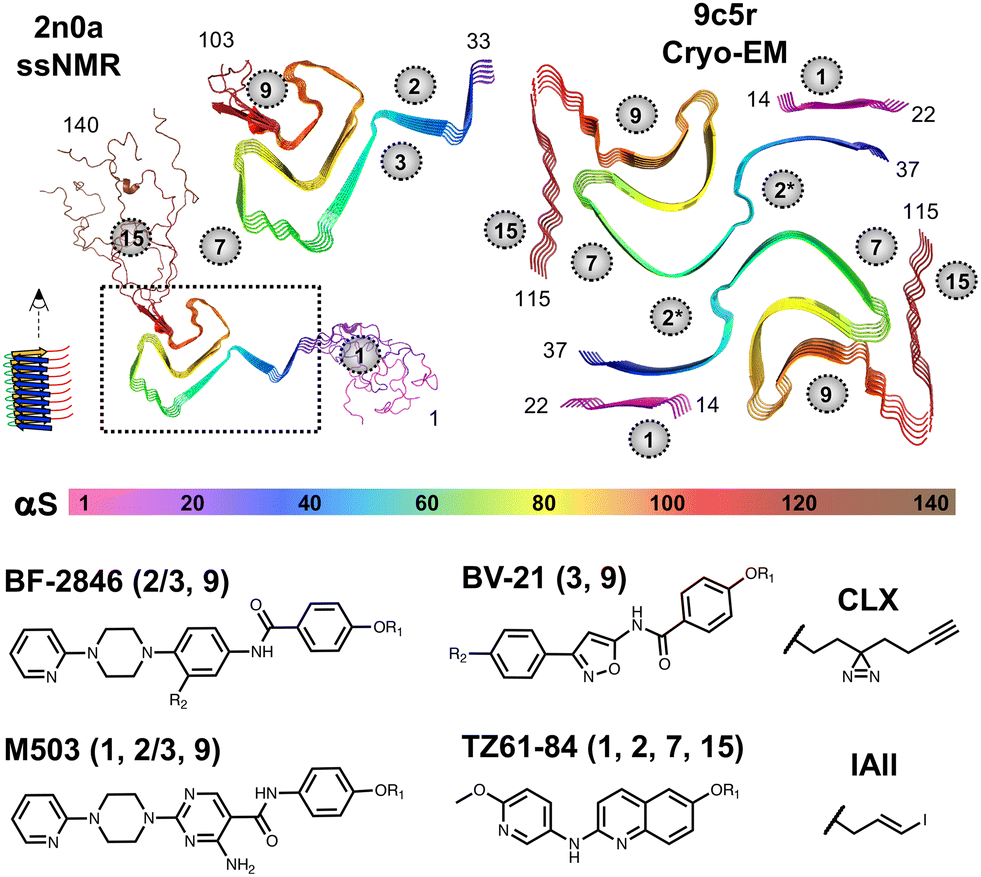
A fine tuned OpenFold3 for all atom amyloid fibril structure prediction, including the small-molecule ligands bound within the fibril core. By conditioning on cross-β stacking geometry, the model builds multi-protofilament fibrils and docks ligands into their stacked binding pockets. Shown here on the α-synuclein fibril 9UG1: the prediction recovers the protein backbone to 0.55 Å and all ten stacked ligands to a 1.74 Å median against the deposited structure.
AggBERT: Amyloid Prediction
A deep learning framework for predicting amyloid-forming hexapeptides using semi-supervised ProtBERT models. Trained on WALTZ-DB dataset with predictions across a 64M peptide manifold. A useful tool for biologic design.
HintToken Learning
Novel approach to data augmentation for protein language models using hint tokens for improved model training and inference.

TAsk
A RAG-based research assistant that helps reason through advanced concepts by searching through class documents and references, then generating informed responses with source citations. The capabilities and educational benefits of this system were studied in a real biological chemistry classroom.
Alpha-Synuclein Binder
A machine learning framework to predict new high-affinity ligands that bind to α-synuclein fibrils, a key pathological feature of Parkinson's disease and related synucleinopathies. Trained on fewer than 300 experimentally measured binding affinities, the model identified five new sub-10 nM binders from a 140 million-compound virtual library.
Protein Stability Prediction
Large language models for predicting protein stability changes upon mutation. Useful for protein engineering and understanding disease-causing variants.

Isotope Distribution Estimation
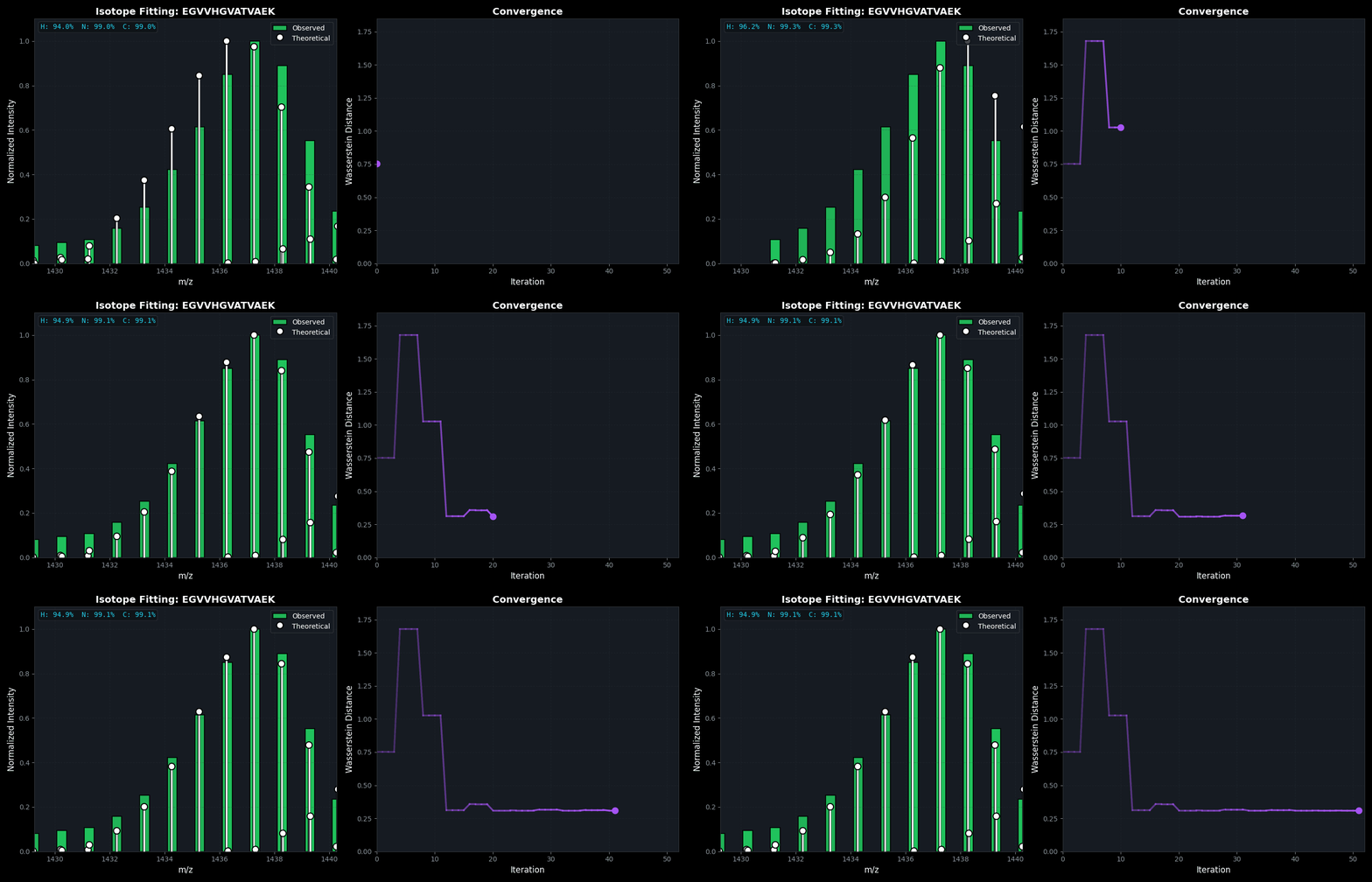
Tools for calculating and visualizing fine isotope patterns in MALDI-TOF data. Includes methods for estimating heavy isotope incorporation fractions in tryptic peptides containing heavy C, N, or H.